
Redesigning the internet’s culture machine
Silk: how and why.

From my perspective, the essential denominator that seems to underly all cultural growth in human society comes down to these three things: shared interests, shared spaces, and shared objects. From cavemen to hippies, this has been found to be true. So why is that when we think about modern culture on the internet we use a different formula?
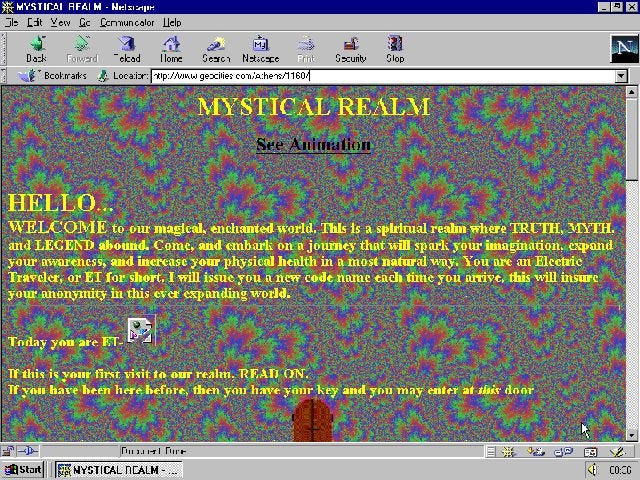
The original internet was designed to be local. Long before the explore page, you were actually expected to explore pages. Websites functioned as opportunities for intellectual growth and discovery; they were spaces wherein endless strings of hyperlinks and user-generated media encouraged people to fall down rabbit holes, discovering adjacent websites and, in turn, fall down even more rabbit holes. No path was the same. This process would gradually take its due course and people would naturally gravitate towards the epicenters of their interests, ending up in spaces occupied by likeminded, but distinctively different people. There was practically nothing but your own personal intrigue to guide you, and the resulting experience was immensely rewarding for all who participated. This was the true beauty of the internet. Culture thrived.
Over the last 15 years, our selection of platforms for communication, creativity, and discovery have been gradually but brutally eroded by business practice that cares more about isolating users for profit-extraction and political gain than providing them online infrastructure that lends itself to organic, meaningful, and productive human experiences. This is why society’s widespread media intake and internet exploration presently hinges more on serving the attention economy than anything else — the incentive structures we operate within are simply not designed for our gain. Users are completely surrendering their web-surfing agency to suggested content algorithms, ending up in echo chambers, and finding their wallets more influenced by trends than personal taste. This is not how culture thrives.
You can think of Silk, the new platform I’m building with some friends, as a sort of internet rehab center. Our team wants to do the same thing for online social networking that LSD did for hippies: take us back to the land. Take us back to the basic mechanics of community, culture, and creativity online, and then let network effects handle the rest.
If you’re wondering how, exactly, I now humbly offer you a rabbit hole of my own: a link to our most recent platform overview, the Silknode Whitepaper. Enjoy.
Kindly,
Zane